For this exhibition, I was inspired by my first visit to the Osher Map Library at the University of Southern Maine. Walking through Glickman Hall to reach the library, I was struck by the glass walls that create a visual connection with the world beyond; a permeable boundary between the interior and exterior. Just outside stretched a rain meadow and the campus on Forest Avenue, the street name itself a reminder of what once grew there.
The Map Library acknowledges that it sits "on land that was once water, and once part of a water-based ecosystem, which, for thousands of years...provided for the indigenous peoples of the Dawnland, the Wabanaki." Beneath the campus lies this deep history: waterways and forests, and those who lived there. More recently, in 1919, a bakery occupied this place and it fed Portland families for decades.
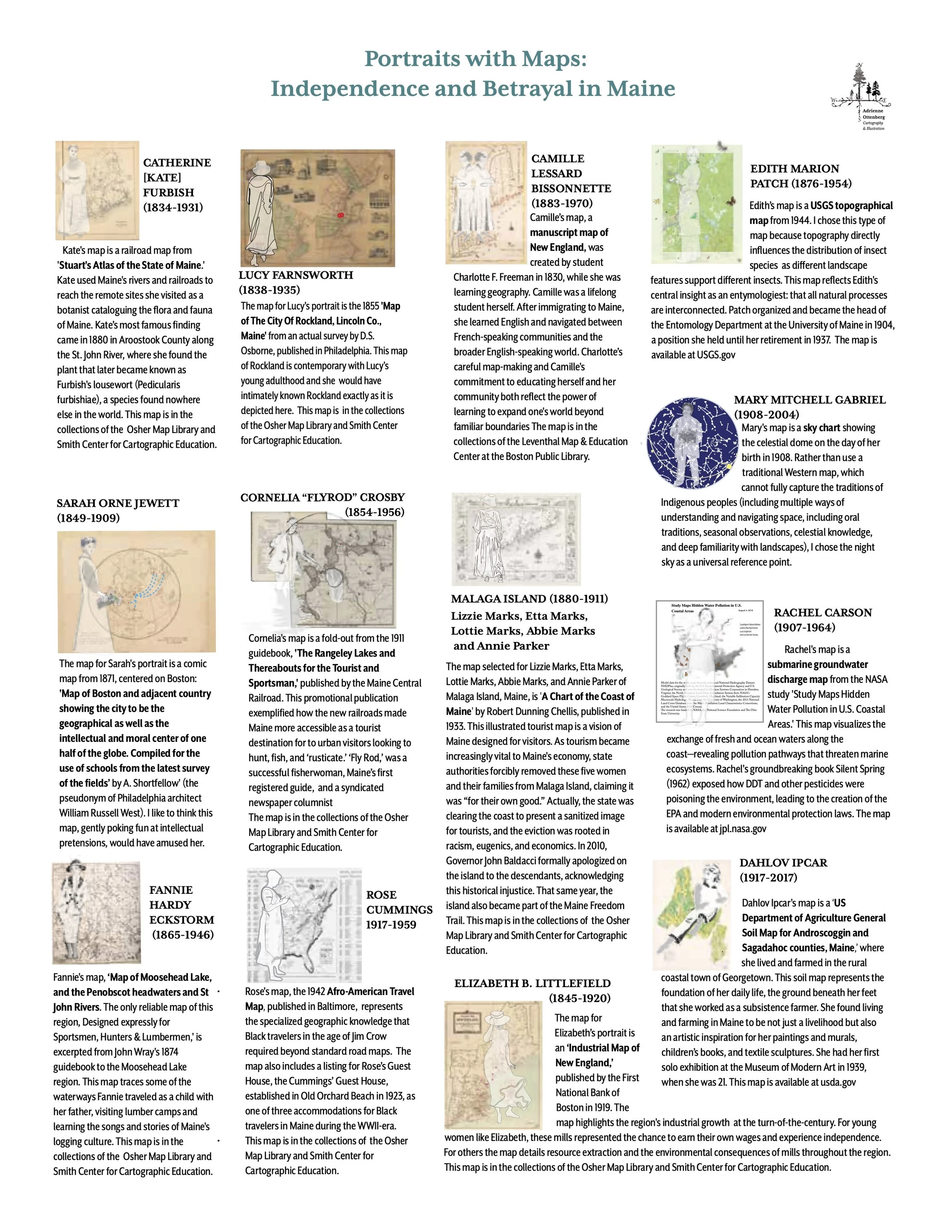
Like my earlier experience at the Eldridge Street Synagogue, I saw this place as a portal to the past. Where the synagogue's crumbling grandeur connected me to immigrant women in the Ladies Gallery, the Map Library's maps revealed pathways to Maine's independent women. Maps became windows to other lives.
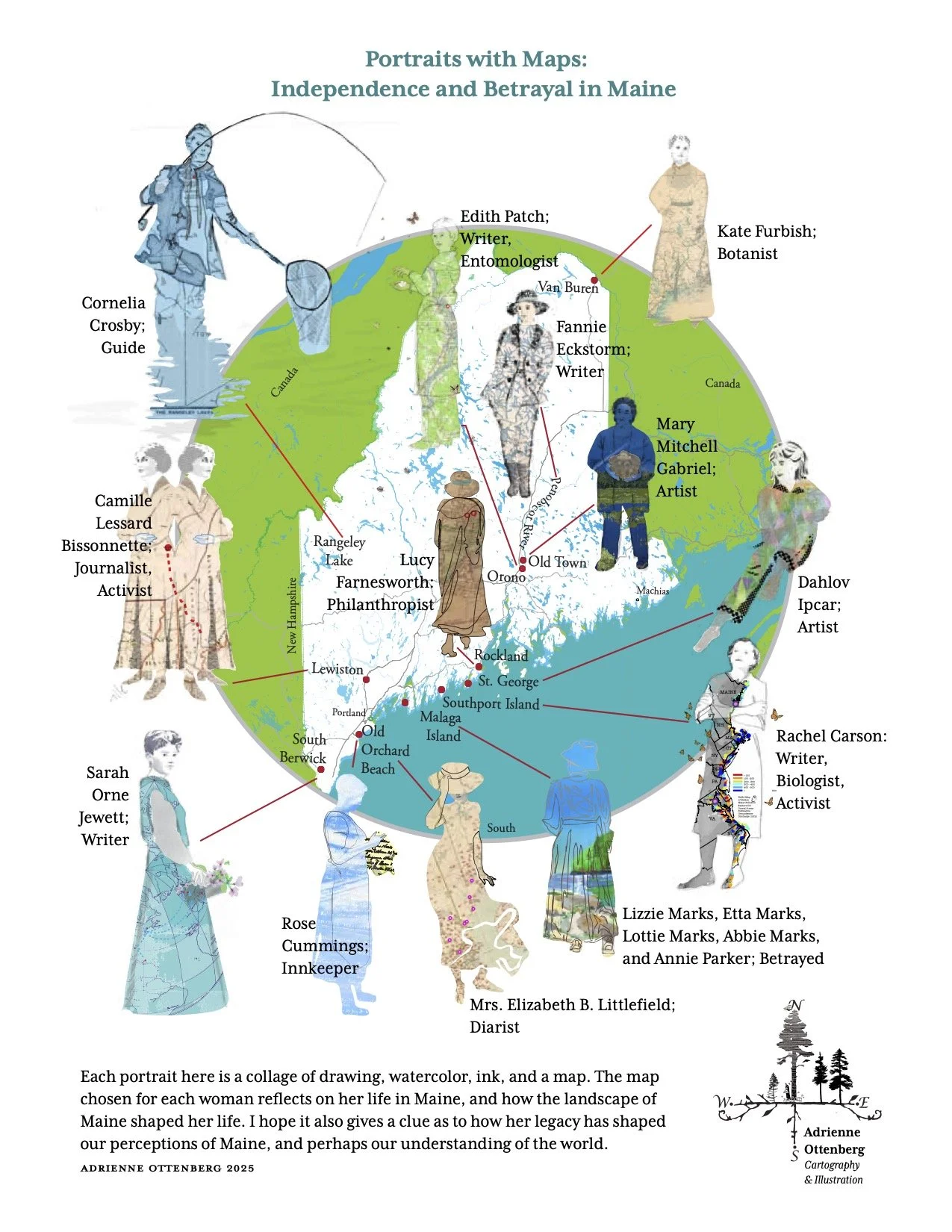
I print these portraits on silk, so the banners move with the air currents, and light moves through the banners. Creating a sense of breath and an ethereal presence. I am guided by this quote from St. Augustine, "The dead are invisible, they are not absent."